

The Protein Diaries
The Fairest in all the Land
The information surrounding diet culture has gone up and down, back and forth, and often leaves us confused and lost. People always disagree on whether they should be eating carbohydrates or fat. However, it seems the one macronutrient everybody can agree on is protein.
No matter where you turn, protein is front and center — every recipe highlights how much protein is in each serving, items on the shelf proudly showcase their protein content, and suddenly judging a meal worthy or not based on its protein content feels like it’s our royal duty.

While we can all agree that protein stays (even Big Food agrees), most people don’t actually understand it — how it works in the body, or why it’s so important. So let’s grab our pens, open to a clean page, and dive in.
The Big P
Protein is an essential macronutrient impacting nearly every function in our lives. It can be found all throughout the human body, from our hair, skin and nails to our bones, organs and cells. For every one gram of protein consumed, you get 4 calories. The recommended daily allowance (RDA) for protein is 0.8 grams per kilogram or 0.36 grams per pound, however, there remains a lot of controversy among leading health professionals about this value.
Unlike fat and carbohydrates which have simpler structures containing only hydrogen, oxygen and carbon for storage and energy usage, protein has a more complex structure that contains nitrogen as well. This complexity allows it to function in a range of different roles. Protein is built up of amino acids; little building blocks that shape the protein in specific ways for specific functions.
Protein has a bunch of tasks in the body, including:
muscle repair and synthesis
muscle growth and maintenance
weight management
blood sugar regulation
hormone production
supports cellular structure and support
Let’s take a ride to the Protein Palace.
The Amino Army
Amino acids are organic compounds built up of an amino group, a hydrogen atom, a carboxyl group, and a side chain (i.e. an R-group). This side chain determines the chemical properties and biological function of each protein.
There are 20 amino acids that humans rely on, classified into three groups: essential, non-essential, conditional.
Essential Amino Acids
Essential amino acids are amino acids that our bodies cannot produce. We must rely on food sources to get an adequate amount of them. There are 9 amino acids that fall into this group:
Histidine: used to make histamine and carnosine; supports immune function, digestive and reproductive systems, sleep cycles, nerve cell protection, tissue growth and maintenance
Isoleucine: key role in muscle metabolism, growth and repair, hemoglobin production and energy generation
Leucine: a metabolic multitasker; helps to moderate blood sugar levels, synthesize proteins, heal wounds, produce growth hormone, and contributes to brain health
Lysine: when thinking about your bone density, think about lysine; aides with calcium absorption, production of collagen and elastin, increases immune function, and maintains healthy balance between your stress hormones
Methionine: supports detoxing and metabolism, also helps with tissue growth and mineral absorption, synthesis of creatine
Phenylalanine: encourages neurotransmitter production for your brain, and synthesizes non-essential aminos, also acts as a precursor for melanin (try to say Phenylalanine 3x fast!)
Threonine: also aids with collagen and elastin production, like lysine, and plays a role in fat metabolism
Tryptophan: well known for turkey day; helps to regulate circadian rhythm, and contributes to the production of serotonin and melatonin, necessary to produce B3
Valine: helps with muscle growth, energy production and tissue repair
Non-Essential Amino Acids
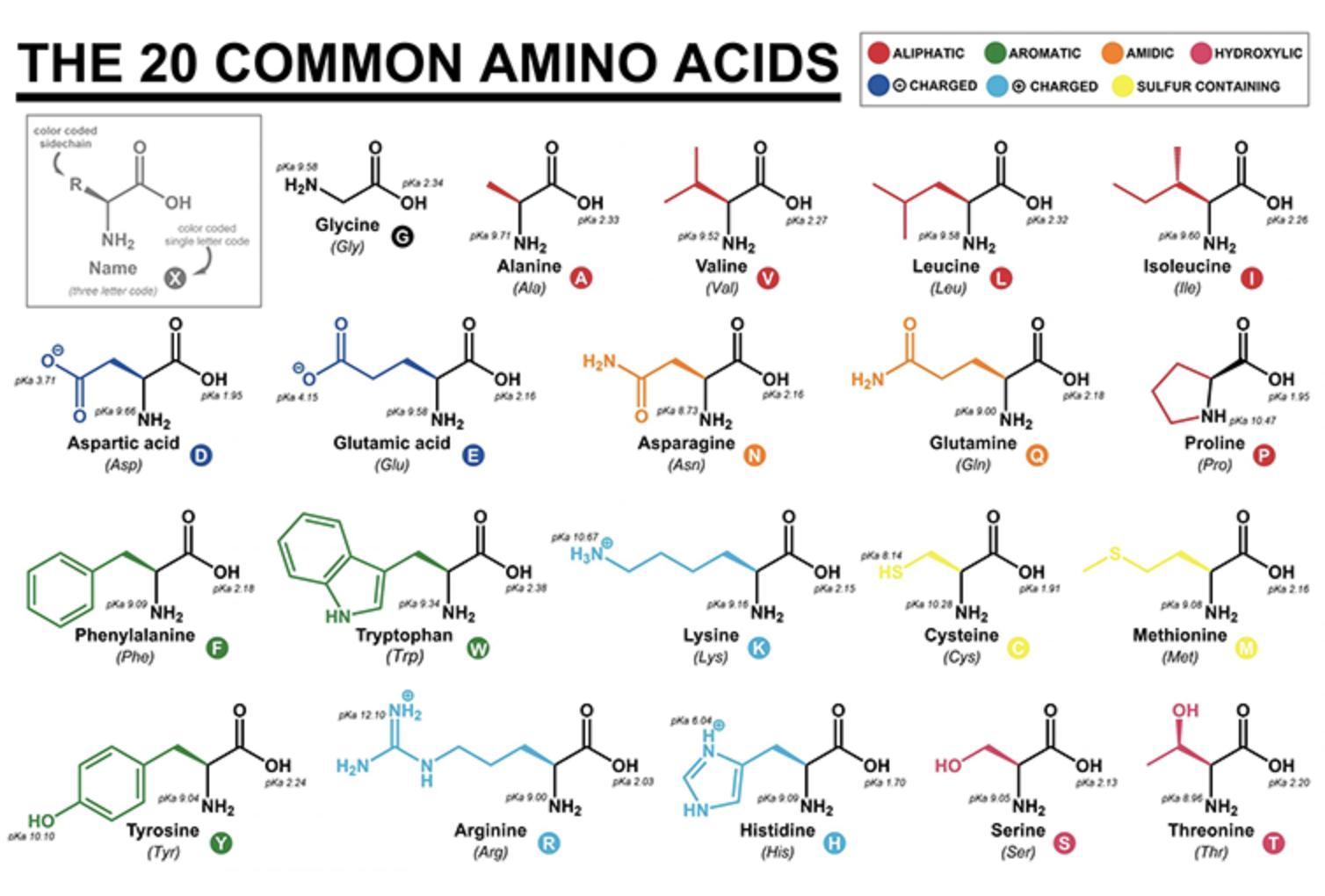
Graph showing the different structure of each Amino Acid covered here
While these aminos can be found in food, our bodies actually produce them on their own. There are 11 aminos acids that fall into this group:
Alanine: helps the liver to stay healthy through toxin removal, helps with glucose production (via gluconeogenesis)
Arginine: boosts nitric oxide to improve blood flow (great for the heart), plays a role in stimulating release of growth hormone which may help to decrease body fat, improve healing and recovery, and increase muscle growth rate
Asparagine: involved in the functioning of the central nervous system to help with the production of neurotransmitters, synthesizing other proteins (i.e. glutamine), and ammonia detoxification
Aspartic Acid: involved in hormone regulation, nervous system function, and reducing post-exercise ammonia levels
Cysteine: helps to build protein like keratin for your hair skin and nails, and helps to form glutathione which has antioxidant power
Glutamic Acid: important for the metabolism of carbohydrates and key player in the Krebs Cycle; converts to glutamate which helps to stimulate nerve cells signaling
Glutamine: one of the most abundant amino acids present in the body; helps with immune function, nitrogen balance, can help to reduce cortisol levels, improve wound healing, boost growth hormone levels, support GI health, and promote protein synthesis
Glycine: needed to produce a crucial antioxidant (glutathione), a key component in creating collagen and creatine, and acts as a precursor for proteins, DNA, plays a crucial role in creating collagen and creatine, helps to remove toxic substances in the liver and has anti-inflammatory compounds
Proline: plays a role in cellular function, collagen production, maintenance, and healing
Serine: derived from glycine, helps to form choline and phospholipids, aids with healthy sleep patterns and nervous system functioning
Tyrosine: made from phenylalanine; serves as the foundation for thyroid hormone, regulates appetite, aids with melanin production for skin health
Conditional Amino Acids
Finally, this category is comprised of non-essential amino acids that the body can make on its own during special circumstances (ex. during a bad illness)
These include:
Arginine
Cysteine
Glutamine
Glycine
Proline
Serine
Tyrosine
Branch-Chained Amino Acids
A few years ago, talk of branch-chained amino acids (commonly referred to as BCAAs) stole the stage. The spotlight was thrown on them without much information as to what they are. BCAAs are a group of three essential amino acids: Isoleucine, Leucine, and Valine. These three little aminos constitute about 35% of the amino acid content in muscle tissue.
So this begs the question: What makes these three essential amino acids different than the other six?
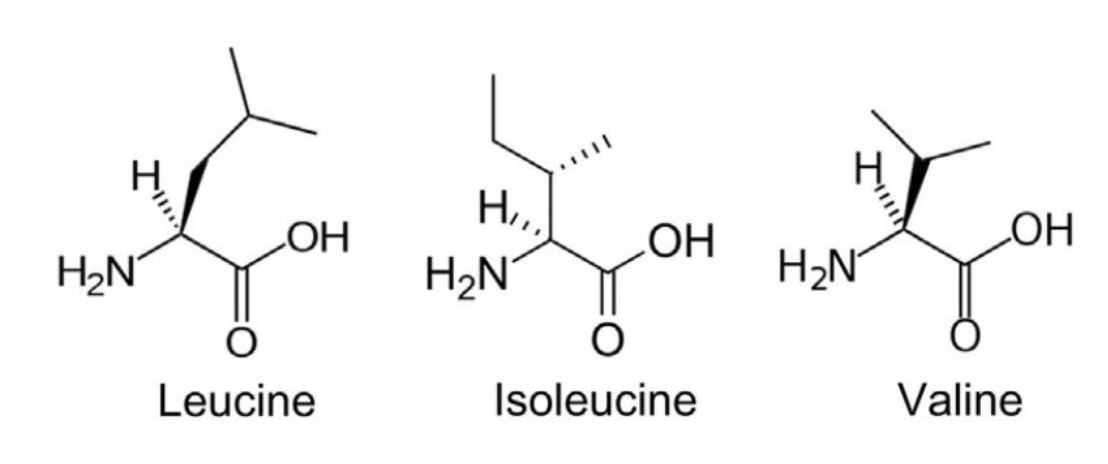
The Branch-Chained Amino Acids: you can see their branched tails on top
All amino acids share the same basic structure: a carbon backbone, an amino group (which contains nitrogen), a hydrogen atom, a carboxyl group (which is 1 carbon double bonded with 1 oxygen molecule and single bonded to a hydroxyl group) and a side chain, also called the R group (the defining feature of a protein).
Isoleucine, Leucine and Valine all have an R group that branches out, instead of a linear structure. This branched structure allows BCAAs to bypass the liver and be metabolized directly in muscle tissue.
Because of this direct route to muscle, BCAAs play a notable role during periods of physical stress. Research has shown that supplemental BCAA intake before, during, or immediately after intense or prolonged exercise may reduce recovery time, reduce soreness, increase muscle growth, and support muscle maintenance.
The Royal Debate: Protein Consumption
As stated earlier, the recommended daily allowance (RDA) for protein in the United States is 0.8g of protein per 1 kilogram (kg) of bodyweight (or roughly 0.36g per 1 pound (lb) of bodyweight).
To calculate:
Body Weight (kg) x 0.8
Body Weight (lb) x 0.36
For reference, someone who weighs 150lbs (68.2kg), the minimum protein recommendation would be about 54g of protein. The RDA for protein was determined in the United States in the 1940’s and it was built around a nitrogen balance model. Researchers measured nitrogen intake from dietary protein sources and compared it to nitrogen losses through sweat, urine, feces and skin. The goal here was to achieve a neutral nitrogen balance.
The public-health objective was to prevent protein deficiency, not optimize muscle mass or strength, physical performance, or long-term functional health. Considerations such as aging, resistance training, physically demanding jobs, and recovery from illness were almost entirely outside the scope of this framework.
Despite advances in nutrition science since the RDA was set, the National Academy of Medicine reaffirmed the protein RDA in the early 2000’s using the same Nitrogen-Balance model based on decades old research. Again, protein was set at a minimum goal to help the 97-98% of people avoid becoming deficient in protein.
Many leading health professionals are talking out against the RDA, and pushing for it to be raised, stating that it’s simply not sufficient for modern health demands. Experts in protein metabolism, exercise science and aging (e.g. Dr. Peter Attia, Dr. Mike Israetel, Dr. Stuart Philips, Dr. Donald Laymen, Dr. Rhonda Patrick, and many others) state that the current RDA should be raised to ~1.2-1.6g/kg (0.54-0.73g/lb) with some stating that going as high as 2.2g/kg (1g/lb) would be beneficial. The science has shown that the current RDA is a disservice for:
older adults experiencing sarcopenia (age-related muscle loss)
people who train hard and people with physically demanding jobs
those recovering from injury, surgery or illness
and that raising the RDA could beneficial to:
increasing muscle mass and strength
combatting sarcopenia as we get older
better immune function (check out the amino acid functions again)
improved healing and recovery
From this perspective, increasing the RDA for protein turns into a quality of life issue, and less of a nutrition issue.
While it’s true that the RDA is set as a minimum to prevent deficiencies, many sources (e.g. nutrition labels, nutrition tracking apps, diet planners and clinicians, etc.) use the RDA as a target goal to achieve on a daily basis. This leaves many people consuming just enough protein to prevent losing muscle, not to optimize their health to reach goals or increase longevity. Raising the baseline needs for protein would reflect modern needs and lifestyle factors as well as link the growing body of research to better long-term outcomes for the general public.
Protein Sources
Since everything seems to be packaged with the protein content front and center, I think it’s important to cut through the noise to determine a strong protein source from a source that just contains protein.
When you look at a nutrition label, whether it’s oats, peanut butter, tofu, chicken tenders, etc., it’s important to look at the ratio of protein to fat and carbs. For example, a jar of peanut butter may list 8g of protein per 2TBSP, but also has 16g of fat in that same serving. This makes peanut butter as an awesome fat source, but not a primary protein source. Now compare that peanut butter to Extra Firm Tofu. A typical serving (1/5 of the package) contains 14g of protein, 7g of fat, and 2g of carbs. This makes Extra Firm Tofu an excellent primary protein source.
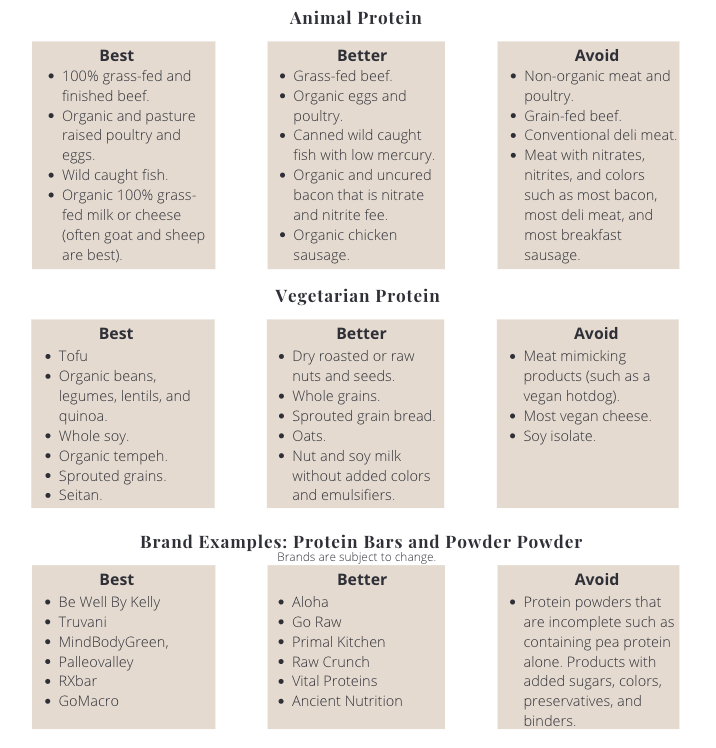
Determining what is a strong versus a weak protein source can be important for those who are dieting, trying to get more protein in their diet without gaining weight, and those who train hard or have physically demanding jobs.
Green-Light Protein Sources
High protein return. Use these as your protein source:
Tofu
Tempeh
Lentils*
Steak
Chicken
Fish
Cottage cheese
Dairy-based and some dairy-free yogurts
Seitan
Side note about lentils: Lentils are technically a carbohydrate-based food, but they also provide a substantial amount of protein. This makes them one of the most protein-dense plant foods available today and a unique crossover option.
Yellow-light Protein Sources
Foods that contain high amounts of protein, but higher amounts of fat (count the protein! But better used as a fat source in meal planning):
Nuts and seeds
pumpkin seeds
chia seeds
almonds
peanut butter
almond butter
Foods that contain high amounts of protein but higher amounts of carbs (contributes to protein, but better used as your primary carb source):
Whole grains
quinoa
oats
farro
rice
Pastas
traditional pasta
legume-based pasta
Breads
protein breads
This isn’t to say that foods higher in carbohydrates or fats should be avoided. Instead, when building a meal, it can be helpful to think in terms of the role it plays: choose your protein source first, add your carbohydrate source, and recognize that fats are often already included—though they can always be added intentionally if needed.
For example, your cozy pasta dinner may have a decent amount of protein on its own. However, ideally you will still treat this as your carbohydrate source and define a clear protein source (lentils, chicken, tofu, etc.).
The End of the Royal Proceedings:
To sum it all up, protein is a macronutrient that plays crucial roles in nearly every part of the human system. It’s structure and function is dictated by the amino acid profile. These little aminos act in a large capacity, from immune function and cellular signaling, to fat metabolism, energy production, and detoxifying the liver.
The RDA for protein was decided decades ago, and while there is a plethora of emerging research in the nutrition sciences, governing bodies have recently reaffirmed the minimum protein intake based on decades old researchers. While it is what it is, many leading health professionals this it’s a disservice to the general population, especially those with higher demands and special circumstances.
As a trainer and nutrition coach, I often suggest my clients try to consume around 100g per day balanced across each meal. This is a realistic and approachable goal that introduces a modest increase in intake; enough for clients to notice changes in performance, recovery, and how they feel overall.
However, please remember that this is not medical advice. Before making any changes to your diet, it is always best to consult your healthcare provider. Every body is different, and our nutritional needs reflect that.
Lastly, while protein content may be boldly advertised on the front of most packages in the grocery store, remember to flip the label over. Understanding whether you’re choosing a green-light protein source or a food that simply contains protein is the real royal skill.
