

Health Span vs. Lifespan: Why Women Should Prioritize Strength, Mobility, and Metabolic Health
If you read nothing else, read this:
Women’s bodies change across the decades — especially as estrogen declines — increasing our risk for muscle loss, bone loss, and metabolic disease. The solution isn’t restriction; it’s intention. Build muscle early, prioritize strength and metabolic health in midlife, and maintain muscle and mobility as you age. Eat enough protein, stop chronic dieting, and adopt a plant-forward approach to support hormones, gut health, and cardiovascular function. Include more — don’t restrict more.
Reports show that women are living longer. But are we living well?
On average, women outlive men by about 5–6 years. That’s a win! Right?
Longevity alone doesn’t tell the full story though. Because, let’s face it: while women are living longer, many of us are not necessarily living stronger.
Behavioral differences absolutely play a role in the lifespan gap. Men are statistically more likely to smoke, drink heavily, and take physical risks. But biology matters too. Estrogen does far more than prepare our bodies for a baby and quietly exit in our 50s. It’s been shown to support heart health, brain function, and bone density.
Woohoo! Right? But, no.
The downside: yes, estrogen walks out the door in your 50’s, but she’s packing her bags and shipping them off in your 30’s and 40’s.
While menopause is often framed as something that happens in our 50s, hormonal shifts actually begin earlier. Subtle declines in estrogen can start in our 30s, gradually accelerating through perimenopause and into menopause. And as estrogen declines, so do some of its protective effects.
Bone density begins to decrease, and muscle mass becomes harder to maintain (sarcopenia). Women are disproportionately affected by osteopenia and osteoporosis. Of the 10 million Americans diagnosed with osteoporosis, a staggering 80% of them are women. Sarcopenia starts to occur in our 30’s with a 3-5% decline per decade. We aren’t only losing muscle mass with age, we’re losing our strength.
Our risk for cardiovascular disease (CVD; the #1 killer among American women) and neurodegenerative conditions rises. Estrogen plays a crucial role in protecting heart from inflammation that allows for plaque build-up. While the contrast is stark from pre- to post-menopause, as estrogen starts to decline in our 30’s and 40’s, our risk for CVD starts to climb. Women are also at higher risk for developing Alzheimers, making up the two thirds of Americans that are living with Alzheimers.
These physiological shifts are significant. Yet much of the public conversation around menopause centers on hot flashes, weight gain, and mood swings. Meanwhile, the changes happening beneath the surface (muscle loss, bone loss, shifts in metabolic health, and increased risk for neurodegenerative disease) often began decades earlier and quietly progress without intervention.
Sure, men experience hormonal changes too, but they tend to be more gradual. Women experience a sharper physiological transition over a shorter window of time.
Too often, these declines are dismissed as “normal aging.” While these shifts are bound to happen, it doesn’t mean we are helpless.
We may live several years longer. But without intention, those extra years can become years marked by fragility rather than capability.
Defining the terms
The fitness and wellness space is full of buzzwords. So before we go any further, let’s define what we’re actually talking about.
Lifespan: refers to the total number of years you live. It’s the quantity of life (from birth to death) and it’s the metric most often cited in statistics comparing men and women.
Health span: refers to the number of years you live free from chronic disease and significant physical limitation. It’s the quality of those years based on your strength, mobility, cognitive clarity, independence, and metabolic health.
Longevity: while related, this term is slightly broader. It refers to the pursuit, strategy, and behaviors that aim to extend lifespan. Nutrition, exercise, stress management, sleep are all longevity tools. But longevity alone doesn’t guarantee vitality.
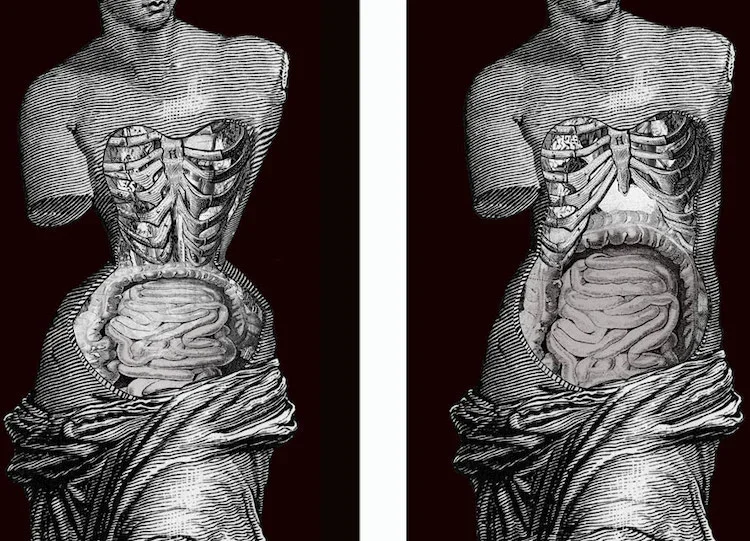
This image is supposed to depict what a normal body looks like, and the impact of wearing corsets
You can live a long life.
But our focus lies in how many of those years are strong, capable, and independent?
The history of disservice for women
For centuries, women have been taught, both directly and indirectly, that smaller is better.
Smaller waist. Smaller appetite. Smaller presence.
Today it looks like long cardio sessions followed by a salad while cooking dinner for everyone else. But this narrative didn’t start in modern fitness culture. It started long before that.
In the 16th through early 20th centuries, corsets were used to cinch the waist and exaggerate curves. They restricted breathing, compressed organs, altered rib cages, and in extreme cases, caused fainting and long-term damage. (We all remember that scene in Pirates of the Caribbean when Elizabeth faints. Dramatic, but not entirely fictional.)
Then came crinolines and bustles: structured undergarments made of metal cages or stiff horsehair designed to exaggerate hips while making the waist appear smaller. They were heavy, restrictive, difficult to move in, and in some cases deadly when they caught fire.
Hobble skirts followed, and they were so tight at the hem that women were forced to take tiny, restricted steps. Falls and injuries were common.
Even the so-called “healthier” S-bend corset promised improvement while still distorting posture and placing unnatural stress on the spine.
The message was consistent:
Shape the body. Restrict the body. Control the body.
Fast forward to today.
We’ve traded metal cages for waist trainers. We’ve traded rigid corsets for cosmetic procedures. We’ve traded restrictive garments for restrictive dieting. And in the fitness world, women have been, and still are, funneled toward calorie-burning cardio, shrinking themselves instead of strengthening themselves.
Different tools, but same pressure. For generations, women have been conditioned to prioritize appearance over capability.
And this is where health span enters the conversation. When we focus solely on being smaller, we neglect the very things that protect us as we age: muscle mass, bone density, metabolic resilience, and mobility.
Metabolic Health:
We’ve all heard of the menopause weight, right?
“once you hit menopause, you just pack on 10lbs and you can’t get rid of it!”
As menopause approaches and estrogen declines, women often experience changes in body composition, insulin sensitivity, and fat distribution. But this isn’t just about gaining those 10lbs, its about the metabolic shift.
Estrogen plays a protective role in glucose regulation, lipid metabolism, and cardiovascular health. As levels drop, women become more susceptible to:
Insulin resistance
Higher LDL cholesterol (the bad cholesterol)
Increased blood pressure
Increased visceral fat (the fat around the belly)
Greater risk for cardiovascular disease and Type II diabetes
These are considered silent conditions or silent killers because they start gradually without symptoms. Being aware of this is our superpower.
Why what you’re eating is so important
Past the internal changes we don’t immediately see (loss of bone density, gradual muscle decline, rising cholesterol) women also experience the more visible symptoms of menopause: hot flashes, vaginal dryness, sleep disruption, mood shifts, irritability, and more.
While these symptoms are common, they are not random.
As estrogen declines, inflammation can increase, insulin sensitivity can worsen, and cardiovascular risk begins to climb. This is why metabolic health becomes so important during this phase of life.
Research shows that shifting toward a more plant-forward dietary pattern is associated with improvements in cardiometabolic markers and reductions in menopausal symptoms; particularly vasomotor symptoms like hot flashes. Some clinical trials using low-fat, whole-food plant-based (WFPB) patterns rich in soy have shown significant reductions in hot flash frequency and severity.
Why might this work?
Research has shown that a diet high in plant foods such as legumes, beans, whole grains, fruit, and vegetables are also high in fiber, antioxidants, polyphenols, phytonutrients and phytoestrogens.
Fiber slows the rate of glucose absorption (thereby reducing blood sugar spikes), improves cholesterol levels, and supports a healthy gut microbiome. This is all crucial during a time that insulin sensitivity and cardiovascular health may be declining.
Antioxidants, polyphenols and phytonutrients help to fight free radicals in the body, reducing inflammation, lowering the risk for certain types of cancers, and even have neuroprotective properties helping to lower the risk of diseases like Alzheimers.
Phytoestrogens have been made to sound scary. But they can exert mild estrogen-like effects in the body. While they are not a replacement for endogenous estrogen, they may help moderate certain menopausal symptoms for some women. Phytoestrogens have also been linked decreasing the risks of cardiovascular disease, improved weight loss, decreasing the risk of certain cancers and may help to protect bone density.
On the other hand, dietary patterns high in ultra-processed foods, refined carbohydrates, excess alcohol, and processed meats are consistently associated with increased inflammation and higher cardiometabolic risk; which can compound the effects of hormonal decline.
And because women already face increased cardiovascular risk after menopause, supporting metabolic health through nutrition becomes a powerful lever.
But let’s be clear: plant-forward does not mean plant-only. This is not an elimination message. It’s an inclusion message. Add more fruits, more vegetables, more legumes and more fiber.
Try Meatless Mondays. Fruity Fridays. Soy Saturdays.
You do not need to dramatically overhaul your current diet. Small consistent changes and additions matter more.
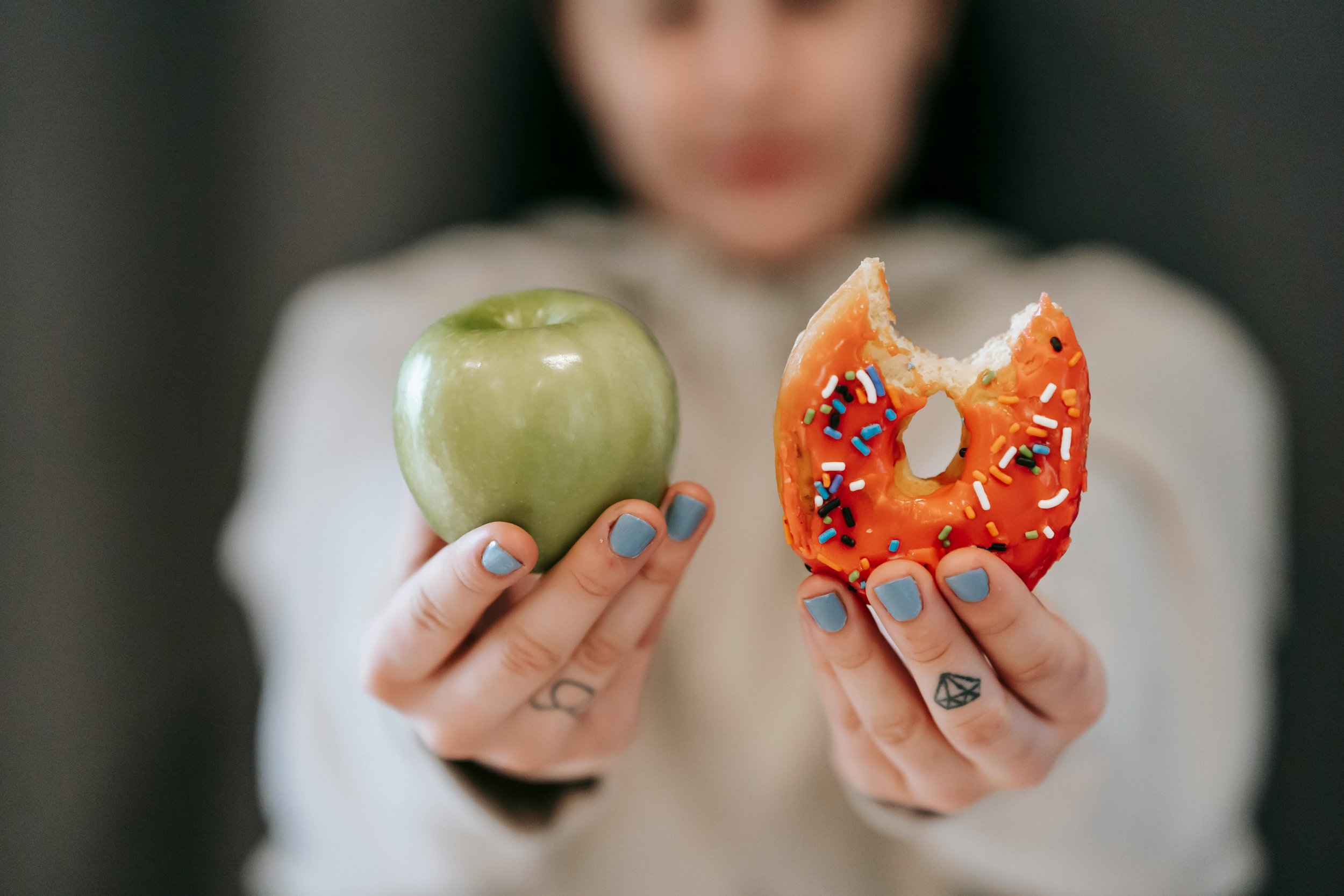
Many may think that going with a more plant-forward approach means to compromise on the protein that we need to build and maintain the muscle that’s so important. Soy foods (tofu, tempeh, edamame, soy milk), lentils, chickpeas, split peas, and beans all provide meaningful protein alongside fiber and micronutrients, and all those compounds mentioned above.
Asking you to add more food to your plate may sound odd. For too long, women have been fed the information that we need to eat less and move more. But chronic dieting and under-fueling (which accelerates muscle loss, reduce metabolic rate, and compromise bone density) is more harmful to our health than focusing on including an abundance of nutritious foods.
Through the decades
Women have been cheated out of knowledge for so long, due to lack of inclusion in studies until the 1990’s. However, science has progressed so far, and the information is out there. It’s a matter of knowing how to implement and what to do with it.
In your 20’s: focus on building muscle and habits
Your 20’s are a powerful foundational decade. This is the time to build muscle mass, bone density, and routines that will carry you through life. Train hard and explore different styles. Lift heavy, sprint, jump, build endurance. The goal isn’t perfection; it’s consistency.
Fuel your body to support performance and recovery. Focus on protein, eat enough, and build meals around a plant-forward approach about 80% of the time. This decade is about creating strength, both physically and habitually. Enjoy food, but use the 80/20 rule: 80% of the time, focus on utilizing food to fuel you, build muscle, and feed your body, and 20% of the time, go have fun.
This decade is building the foundation for the rest of your life.
In your 30’s and 40’s: focus on prioritizing strength and protecting your metabolic health
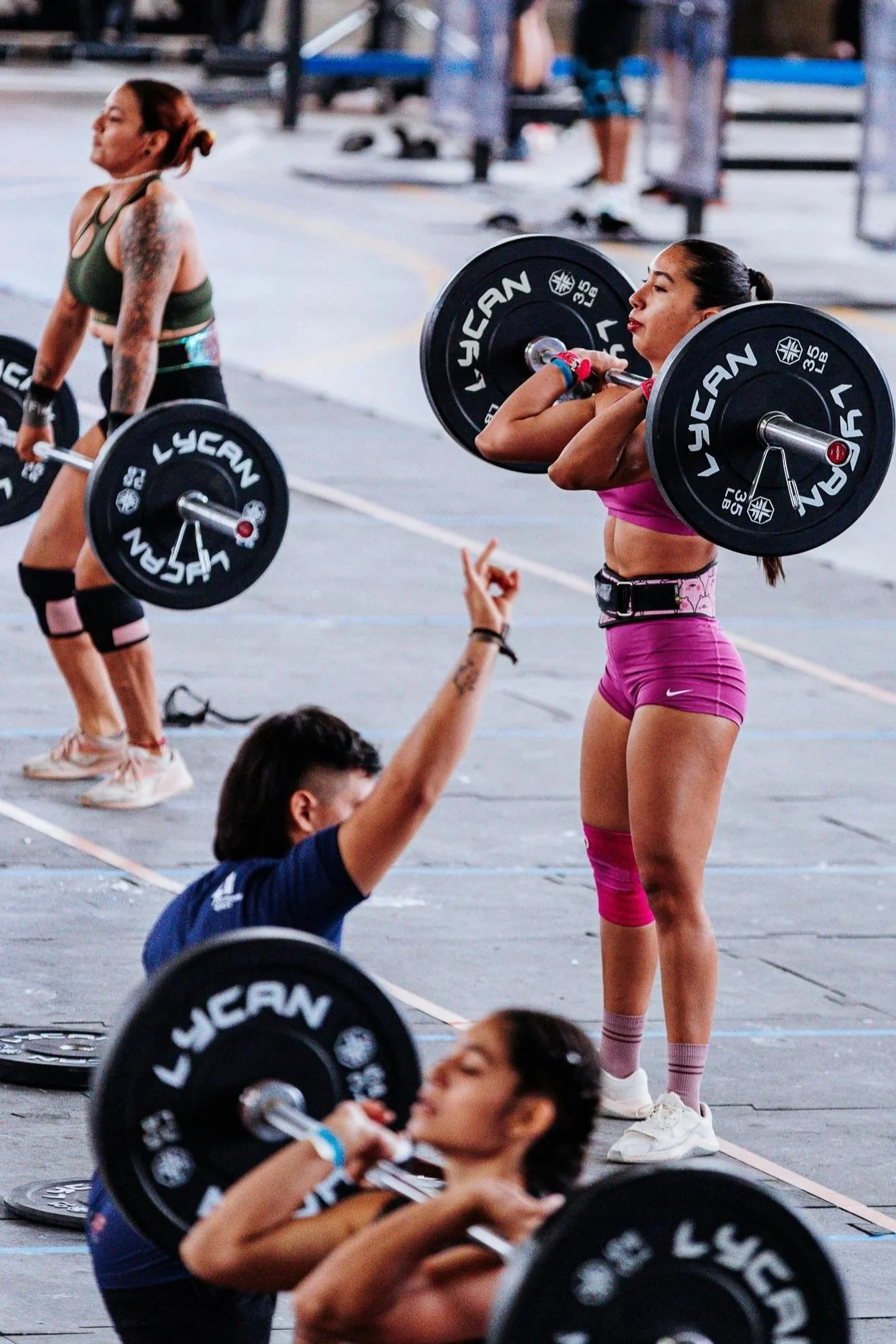
This is where intention becomes crucial. Hormonal shifts begin, and muscle mass and metabolic efficiency don’t maintain themselves the way they once did. Strength training should become the anchor: heavy loads, progressive overload, and continued power work to support bone density and resilience.
Nutrition becomes more strategic. Prioritize adequate protein, calcium-rich foods, fiber, and phytoestrogen-containing plants. Eating enough to support muscle and hormone health is incredibly important. Less is not better; under-fueling accelerates the very changes you’re trying to prevent.
In your 50’s and on: maintain muscle, mobility becomes absolutely non-negotiable
As estrogen declines further, the mission shifts to preservation and quality of life. Strength training remains essential for maintaining lean mass, bone density, balance, and metabolic health. Mobility and balance work become daily practices, not optional add-ons.
Continue eating to support muscle, gut health, and cardiovascular function. This is not the time to shrink your habits or your intake, it’s the time to stay strong, capable, and well-nourished so you can move confidently through the decades ahead.
